In January of 1999, less than a week after I moved out of my then-apartment, peep holes were found in my bedroom and bathroom. The landlord had created them so he could watch tenants. It was a violation, an assault without physical contact, but at the time Kansas laws didn’t acknowledge it past the quaint term of “peeping tom.” Three misdemeanor counts, not felonies.
Sixty days in jail and eighteen months probation is all that monster got for watching me sleep, shower, use the bathroom, dress and undress, and anything else I did in my bedroom alone, or with a partner, for six months.
His lawyer said he’d already suffered the loss of a marriage, the embarrassment of his children, and untold financial losses. As though those things, coupled with the sentence, meant his punishment was enough. As though the horrific things he’d done didn’t warrant anything more than the shame he would carry—in theory—for the rest of his life. As though I, and the other women he watched—weren’t any more victims than the walls themselves. Damaged for the sake of his perversity, but no real harm done.
I made the mistake of believing I was safe in my own home. The apartment I rented, dark blue carpet and high-ceilings and so much natural light, felt good until it didn’t. I’d been through a break-up, was trying to go back to school, had a job I liked, but my mom was sick and I realize now the best description of myself at that time was afraid and aimless. The girl with the academic scholarship she lost her first semester of college. The one who could sing the birds out of the trees but didn’t really sing anymore. The one who only wanted to be good for something but felt bad at everything. And then, the apartment.
A new start. Enrolled in classes at the local university. A job selling books and music and movies. I even made new friends.
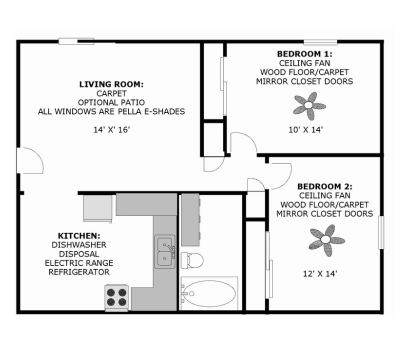
I didn’t last six months. Everything got too hard as I processed the fact of my radiant, hilarious, kind, and beautiful mother going though cancer treatment two hours away. There were so many things I didn’t know how to handle, but I knew I could leave. I’d created a situation that allowed me an out—a luxury not everyone can afford, I know. So I left the apartment to my roommate whose room did not share a wall with the maintenance closet—a fact that matters. My roommate who planned to have her boyfriend move in after I left. My roommate who had moved in after a bad situation with a different boyfriend and I luckily had a spare room to share with her in a wildly reasonable apartment within walking distance to our shared workplace. My roommate who was just 19 while I was a world-weary 22.
The night before I moved out, I packed all my clothes except for the tank top and men’s boxers I was wearing. It was abnormally hot, but we couldn’t adjust the thermostat. It was in a locked maintenance closet between our apartment and the one belonging to our neighbors, another pair of young women in their late teens. All but one of the people who lived on our floor were women. In fact, over 75% of the complex’s tenants were women. That wasn’t an accident. We’d later learn our rent was lower, too, than that of the men who lived there. An incentive to get the kind of people the landlord wanted to look at into the spaces he controlled.
My dear friend J called me at home a week later where I’d returned for financial reasons in theory but, in truth, I was an emotional mess. I needed stability and the discipline of working construction with my dad during the day and coming home to make sure my mom was still alive at night to feel normal.
J said peepholes had been found in my apartment. Drunk neighbors roughhousing in the hall had knocked open the maintenance closet door and found a chair on an old carpet square in the space between the apartments. It was facing a wall covered in holes that looked directly into my bedroom and bathroom and the corresponding rooms of the neighboring apartment. It looked well used. Frequented often. Oily spots on the wall marked where a grotesque and uninvited face had pressed against sheetrock to witness anything and everything people do in private when they believe they are alone.
I’ve never really written about or processed this. I’ve told people, but always in a n outrageously anecdotal sort of way. Three years later, after living mostly with my parents, I graduated from college just shy of 24 and moved back to Lawrence where I found an apartment with no ties to my former landlord. I looked at four places; three of which were tied, in some way, to him, before finding the one I ultimately rented. Shortly thereafter, a lawyer representing me and some of the other young women who had been victimized, won us each a small settlement, enough to pay off my car and allow me to quit the job I’d taken just out of college that I absolutely hated. It was enough to let me work for minimum wage and drink too much and waste my time and feel terrible about myself and date the wrong people without ever considering the effects of what had happened without my consent. At 45, I can see how many of those terrible choices were tied to this central truth: I never felt safe.
Even now I remember the daily panic of checking every room when I got home from work. Opening doors, checking closets, making sure no one was inside. Coming home at night, looking over my shoulder as I unlocked the door to make certain no one was behind me as I entered my basement apartment. I’d rented it because I’d lived in an earth home growing up, so the layout felt familiar. The knowledge that nothing but dirt was on the other side of most of the walls was a comfort. Still, I startled easily at the sounds of things I didn’t recognize. Was that the wind or someone in the wall, moving a chair to get a better view?
It’s been 22 years, half my lifetime ago, and I’m not sure I’ll ever really know the impact of what happened. In the era before #metoo, before anyone I knew spoke about rape culture or stalking or slut shaming or victim blaming, I was a young woman trying to build a life and found myself a minor player in a disgusting play for which I’d never auditioned. And while I’m not broken by it, it certainly affects me.
My choice to share this story is neither a cry for pity nor is it a silent scream into the void. What it is, I hope, is a reclamation and an acknowledgement that the worst things that happen to us aren’t who we are. Who we are is what we do in the aftermath. And what I want to do, in all things, is tell the truth.
 Shannon Carriger